

Reframing Vulnerability
What if we were wrong about the prickly bits?

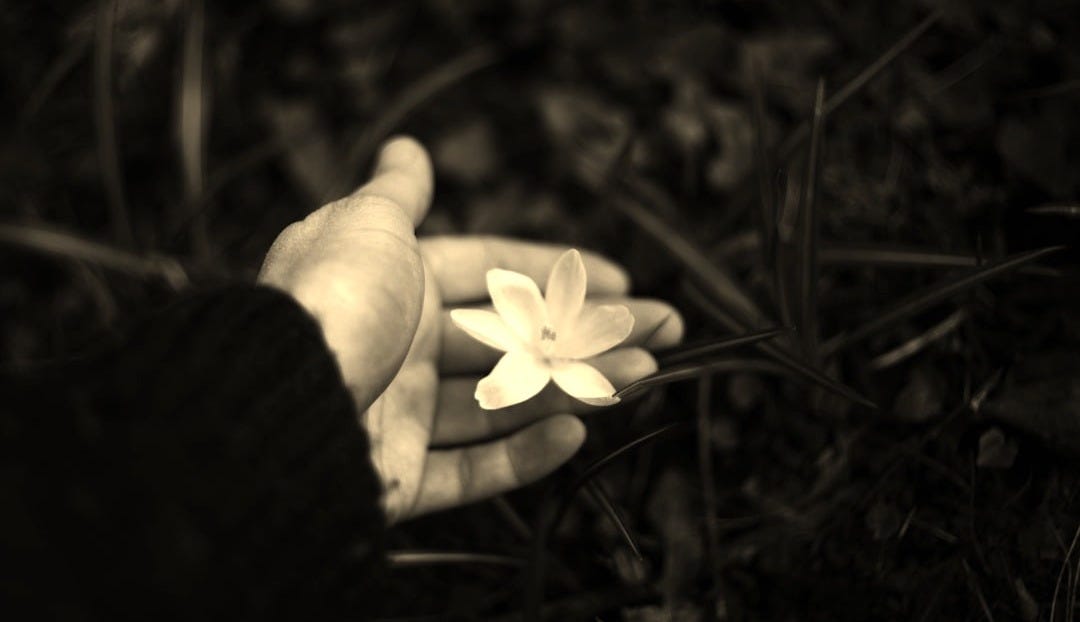
Vulnerability.
Just the word alone can make people flinch.
Some of you reading this just felt something tighten in your chest. Others felt a familiar urge to skip ahead, or close the tab, or suddenly remember you have laundry to do.
That reaction? That is exactly what we are going to talk about today.
Because vulnerability does not mean what most of us were taught it means. And once you see what it actually is, you cannot unsee it.
What the dictionary gets wrong
The standard definition describes vulnerability as exposure to the possibility of being attacked or harmed. Physically. Emotionally. Financially. You name it.
No wonder we run from it.
If that is the operating definition living rent-free in your nervous system, then of course vulnerability feels like standing in the middle of an open field in a thunderstorm.
Of course you have built structures around yourself.
Of course you have learned to be strategic about what you show, when you show it, and who gets to see the full version of you.
But here is what the dictionary misses completely.
It captures the risk. It says nothing about the reward. And it says absolutely nothing about what happens to you when you spend your life avoiding it.
How I learned this the hard way, in motion
Since November I have been traveling full time. No fixed address. No lease. No routine that looks the same from one month to the next. Just me, my work, my research, and whatever city I happen to be in on any given Tuesday.
What I did not expect is that full time travel would become one of the most intense personal development experiences of my life. Not because of the places. Because of what the constant movement stripped away.
When you are at home, in your city, with your people, your routines do the heavy lifting of keeping you comfortable. You know which coffee shop has the right energy. You know which friend to call when you are in your feelings. You know how to move through your days in a way that requires very little of you emotionally.
Take all of that away and you are left with yourself. Just yourself. And then you have a choice. You can isolate, which is always an option. Or you can open.
I chose to open.
The hostel experiment
I have been traveling solo internationally since 2017 and have tried a fair share of hostels all around the UK and branched out into ones during my recent trip to the Yucatan too.
The travel I do now since November has felt different and for good reason because I gave up the house I was renting to curate my life down to a small storage unit and a backpack and a small rolling suitcase to travel full time for at least a year.
I enjoy the social level by choice that you can have when you stay at ones geared more to traveling digital nomads and not to the spring break all year crowd. I enjoyed the occasional conversation especially to learn more about how and why people end up in a more nomadic lifestyle to share with my readers.
About a month into this chapter I spent a week at a social hostel in a country new to me. For those who have not done it as an adult, it is exactly what it sounds like. Communal spaces. Shared kitchen. Coworking areas. Strangers becoming temporary companions by virtue of proximity and circumstance.
I will be honest. My first instinct is always to be pleasant but contained. Warm but boundaried. Present but not really fully open. The first weeks had honestly become a place where I needed to release and process a ton of information, emotions and old mindsets.
But something shifted. I got more curious instead of just careful. I started actually talking to people. Asking real questions. Sharing real answers when they asked me things back. Not performing openness. Actually being open.
And the Tulum moment crystallized it for me perfectly.
I was at an hostel in Tulum and struck up a conversation with a fellow guest. I offered some thoughts on something she was navigating, just genuine input that felt relevant. Easy. Natural. No agenda. We talked again over the next few days and several minutes into the conversation I realized I recognized her online name because I had subscribed to her Substack just weeks before because her writing genuinely resonated with me.
She was someone whose work I admired. Whose voice I had found inspiring and meaningful. And here we were, having a real conversation at a table in an open air dining area in Tulum, because I had chosen to show up instead of stay small.
That is vulnerability. Not the dramatic kind. Not the falling-apart kind. The quiet, unglamorous, everyday kind. The kind that says I am here, I am real, and I am willing to let this be an actual moment between two actual people.
The performance problem
Here is where it gets interesting and a little uncomfortable.
There is a version of vulnerability that is not really vulnerability at all. It looks like it. It sounds like it. In fact it has become so common, particularly online, that we have mistaken it for the real thing.
It is performed vulnerability. And it is everywhere.
You know it when you see it. The carefully worded confession that reveals just enough to seem relatable but not enough to actually risk anything. The “raw and honest” post that was edited seven times. The oversharing of surface level struggle while the actual tender thing stays perfectly protected behind it.
Performed vulnerability is strategic. It uses the language and the gestures of openness to create connection without actually requiring you to be exposed. It is armor dressed up as authenticity.
For empaths especially, this is a deeply familiar pattern. Because we are so attuned to the emotional landscape of the people around us, we become extraordinarily skilled at calibrating how much to reveal based on what we sense the other person can handle. Or what will land well. Or what will keep us safe. We have usually learned this because real openness got us hurt somewhere along the way. So we created a version of vulnerability that felt safer. A measured dose. A controlled release.
The problem is that performed vulnerability creates performed connection. And performed connection, no matter how warm it feels in the moment, leaves you lonelier than if you had said nothing at all. Because you were there but nobody actually met you.
What real vulnerability actually is
Real vulnerability is not about how much you share. It is about whether what you share is unfiltered you.
It is the moment you say something and you genuinely do not know how it will be received.
It is telling someone something honest about yourself without first calculating whether they can handle it. It is letting a moment be a real moment instead of a managed one.
It is also, and this is important, knowing when to choose it. Real vulnerability is not the same as having no discernment. You do not owe everyone access to your tender places. Not everyone has earned that. But when you are choosing to stay closed with someone who has earned openness, that is worth looking at.
For me this has shown up most clearly in the non-romantic spaces first. In the hostel conversations. In the Tulum dining area. In the friendships that deepened this year because I stopped performing fine and started saying what was actually true.
That is where I learned that vulnerability is not exposure to harm. It is the willingness to be genuinely seen. And those are not the same thing at all.
The bridge to love
All of that, every bit of it, is the foundation for what happens in romantic connection.
Because you cannot be truly available to another person if you have not practiced being available to yourself and to people in the lower stakes moments first.
Stepping back into dating after more than two years away taught me this at a level I could not have predicted. Not because of any one person or any one moment, but because the whole landscape of it asked me again and again:
Are you showing up, or are you managing?
That is a question worth sitting with for a long time.
I also did an exercise I give my clients called the Open Letter to the Universe, where you get very clear on only one thing: how do I want to feel?
The reframe
Vulnerability is not a wound you manage. It is not a weakness you work around. It is not a liability in a world that can be unkind.
Vulnerability is the mechanism through which real things happen. Real connection. Real intimacy. Real belonging. Real creative work. Real life.
The risk is real. I will not pretend otherwise. Sometimes you open and the moment does not hold you the way you hoped. Sometimes people cannot meet you where you are.
Sometimes it is tender and awkward and imperfect and then opens up into a beautiful wide open field blossoming with possibilities and reflecting back to you the relationship with yourself.
But the alternative is a life where nothing really lands. Where connection happens in the shallows. Where you are technically present in every room and genuinely absent from every moment.
That is the actual harm. Not the vulnerability. The avoidance of it.
Before you go: sit with these
These are not questions to answer quickly. They are questions to carry with you for a day or a week and see what surfaces.
Where in your life are you performing vulnerability rather than practicing it? What would the real version look like in that same situation?
Think of a relationship, friendship or otherwise, where you consistently reveal less than what is true. What are you protecting? Is it still serving you?
When was the last time you said something honest without knowing how it would land? What happened? How did it feel afterward?
What would you do, say, create, or pursue if you were willing to be genuinely seen doing it?
The bravest thing you will ever do is not dramatic. It does not require grand gestures or public declarations or perfectly worded confessions.
It is just being real in a moment when you could have been managed.
That is it. That is the whole thing.
With love and zero pretending, Crystal
Soul Greenhouse is where empaths come to stop apologizing for how deeply they feel. If this resonated, share it with someone who needs permission to be real today.
Until six years ago, I equated vulnerability with weakness, sickness, and dying.
Vvulnerability was not being brave, nor courageous, and definitely not daring to be open, to let people see me, and so I didn't.